








Dario Amodei
CEO, Anthropic
 Anthropic
Within 18–24 months, AI may start replacing coders, especially at junior levels
01 / THE ORIGINAL CLAIM
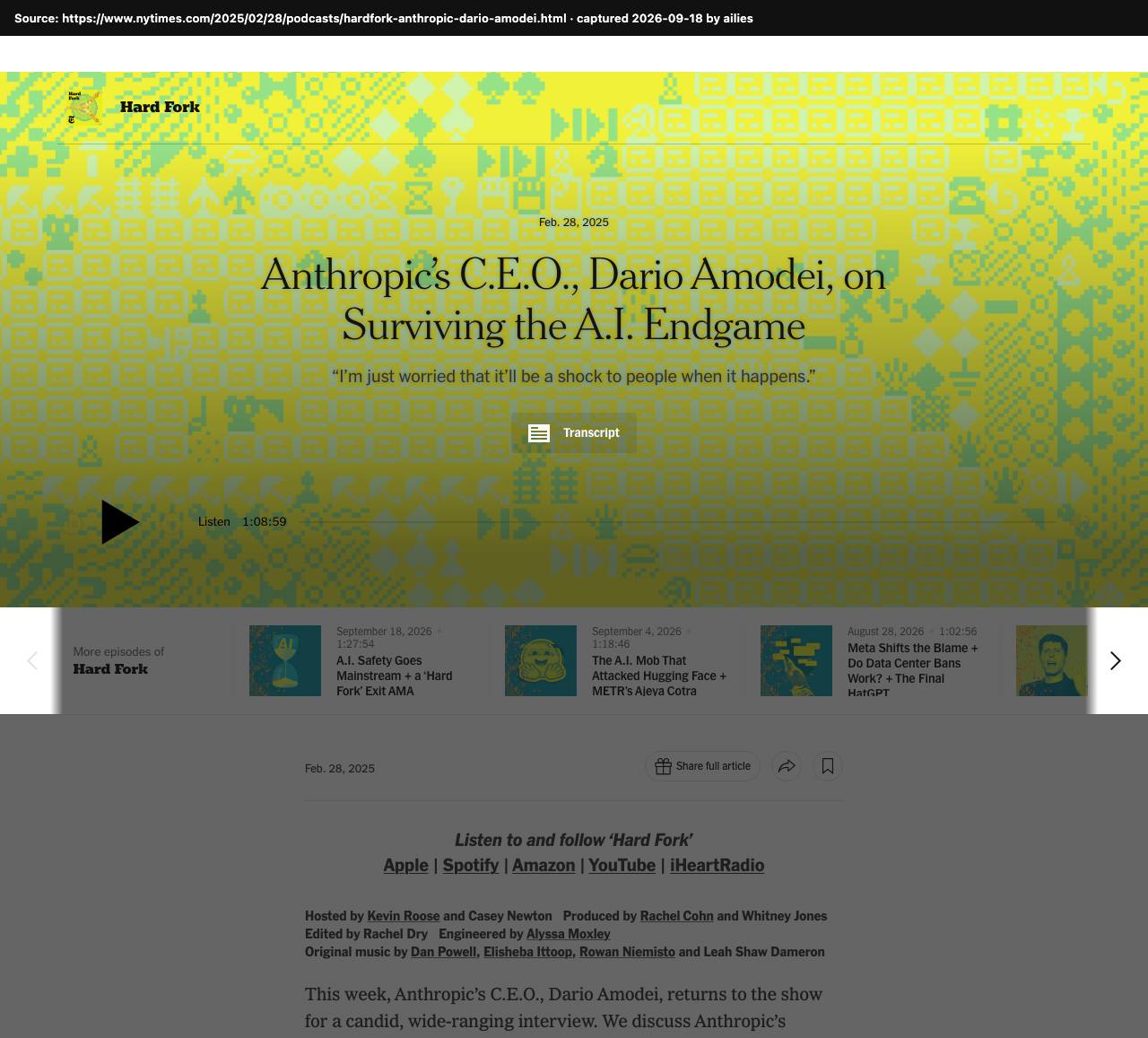
“I do think, in the short run, it will augment and increase the productivity of coders rather than replacing them. But in the longer run — and to be clear, by longer run I might mean 18 or 24 months instead of 6 or 12 — I do think we may see replacement, particularly at the lower levels. We might be surprised and see it even earlier than that.”
Dario Amodei ·
Deadline given: 18 or 24 months (read as 24 months from Feb 28, 2025)
02 / THE REALITY CHECK
PendingNineteen months in, entry-level software hiring has shrunk as he warned, but the slide began in 2022, its cause is disputed, and overall developer demand is recovering.
5 months left
03 / FOLLOW THE EVIDENCE
What actually happened.
-
01
Feb 28, 2025: On Hard Fork, Amodei said AI would augment coders in the short run but might replace lower-level ones within 18–24 months. Asked whether Anthropic was hiring fewer junior developers, he said: "I don't think our hiring plans have changed yet."
nytimes.com ↗ -
02
Nov 13, 2025: A revised Stanford Digital Economy Lab paper found that by September 2025, employment of software developers aged 22–25 had declined nearly 20% from its late-2022 peak, while employment of older age groups kept growing.
digitaleconomy.stanford.edu ↗ -
03
Jan 20, 2026: At Davos, Amodei pushed further: "we might be six to 12 months away from when the model is doing most, maybe all of what SWEs do end to end."
weforum.org ↗ -
04
July 23, 2026: Indeed reported that entry-level roles were just 4.5% of software-development postings in Q1 2026 and senior roles 69.3%. It listed competing explanations: AI, the Fed's rate hikes, and corporate right-sizing after the pandemic hiring boom.
hiringlab.indeed.com ↗ -
05
Aug 2026: Stanford's update found employment of 22–25-year-olds in highly AI-exposed occupations 19% below where it would be had it kept pace with less-exposed peers, mainly through reduced hiring. Experienced workers showed no comparable gap, and the authors found "no evidence of widespread, economy-wide job displacement".
digitaleconomy.stanford.edu ↗ -
06
Aug 24, 2026: Indeed's software-development postings index stood at 74.4 (Feb 2020 = 100), well below pre-pandemic levels but up from a low of 61.1 in May 2025.
hiringlab.indeed.com ↗
Where things stand
The window runs to February 2027, and part of the picture fits his warning. Stanford researchers found employment of software developers aged 22–25 down nearly 20% from its late-2022 peak by September 2025, and in Q1 2026 only 4.5% of Indeed's software-development postings were entry-level, versus 69.3% senior. But the slide began in late 2022, long before his forecast, works mainly through slower hiring rather than layoffs, and the Stanford authors call their findings descriptive, not causal; Indeed also points to interest rates and post-pandemic right-sizing. Overall demand isn't collapsing: Indeed's software postings index rose from 61.1 in May 2025 to 74.4 in August 2026, and BLS projects 10% growth in software developer jobs from 2025 to 2035.
Inspect the original source capture
Evidence
- Stanford (Nov 2025): software developers aged 22–25 down nearly 20% from late-2022 peak digitaleconomy.stanford.edu ↗
- Stanford (Aug 2026): 19% employment gap for 22–25-year-olds in AI-exposed jobs; 'descriptive facts', not causal estimates digitaleconomy.stanford.edu ↗
- Indeed: 4.5% of software-development postings entry-level, 69.3% senior (Q1 2026) hiringlab.indeed.com ↗
- Indeed: software-development postings index 74.4, up from 61.1 in May 2025 (Aug 2026) hiringlab.indeed.com ↗
- BLS: 1,717,800 software developers (2025), projected +10% 2025–35 bls.gov ↗