







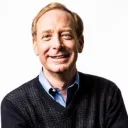
Brad Smith
Vice Chair & President, Microsoft
 Microsoft
AI deepfakes pose a growing risk of deceiving voters in 2024's elections
01 / THE ORIGINAL CLAIM
“the development of AI is racing ever faster ahead, offering extraordinary benefits but also enabling bad actors to deceive voters by creating realistic “deepfakes” of candidates and other individuals. … This all adds up to a growing risk of bad actors using AI and deepfakes to deceive the public in an election.”
Brad Smith ·
Deadline given: 2024 elections ("between the beginning of March and the end of the year")
02 / THE REALITY CHECK
FAKEThe 2024 elections passed without deepfakes deceiving voters at scale. Microsoft's own threat center found they had 'so far not caused mass deception'.
Deadline passed 21 months ago
03 / FOLLOW THE EVIDENCE
What actually happened.
-
01
Feb 16, 2024: Smith announced the 20-company Munich tech accord against election deepfakes, citing the Biden robocall and Sunak deepfakes as signs of a 'growing risk'.
blogs.microsoft.com ↗ -
02
Apr 17, 2024: Microsoft's Threat Analysis Center wrote that high-production deepfakes had 'so far not caused mass deception' and that audiences 'are more likely to gravitate towards and share simple digital forgeries.'
blogs.microsoft.com ↗ -
03
Nov 13, 2024: CETaS found a lack of evidence that AI-enabled disinformation measurably affected the US presidential election.
cetas.turing.ac.uk ↗ -
04
Dec 3, 2024: Meta said AI content was under 1% of fact-checked election misinformation.
about.fb.com ↗ -
05
Jun 13, 2025: A New Hampshire jury acquitted Steve Kramer, who ordered the Biden robocall, of all 22 voter-suppression and impersonation counts. He had separately been fined $6 million by the FCC.
nhpr.org ↗
Why it didn't happen
The 2024 elections were the test, and deepfakes didn't deceive voters at any meaningful scale. A few did circulate, like the New Hampshire robocall below. Smith's key example, the New Hampshire Biden robocall, cost $150 to make: a political consultant paid a street magician to produce it. The FCC fined the consultant $6 million, but a jury acquitted him of all 22 state criminal charges in June 2025. Microsoft's own Threat Analysis Center reported in April 2024 that high-production deepfake videos had 'so far not caused mass deception', and that audiences preferred simple forgeries. By December, Meta put AI content at under 1% of fact-checked election misinformation.
Inspect the original source capture
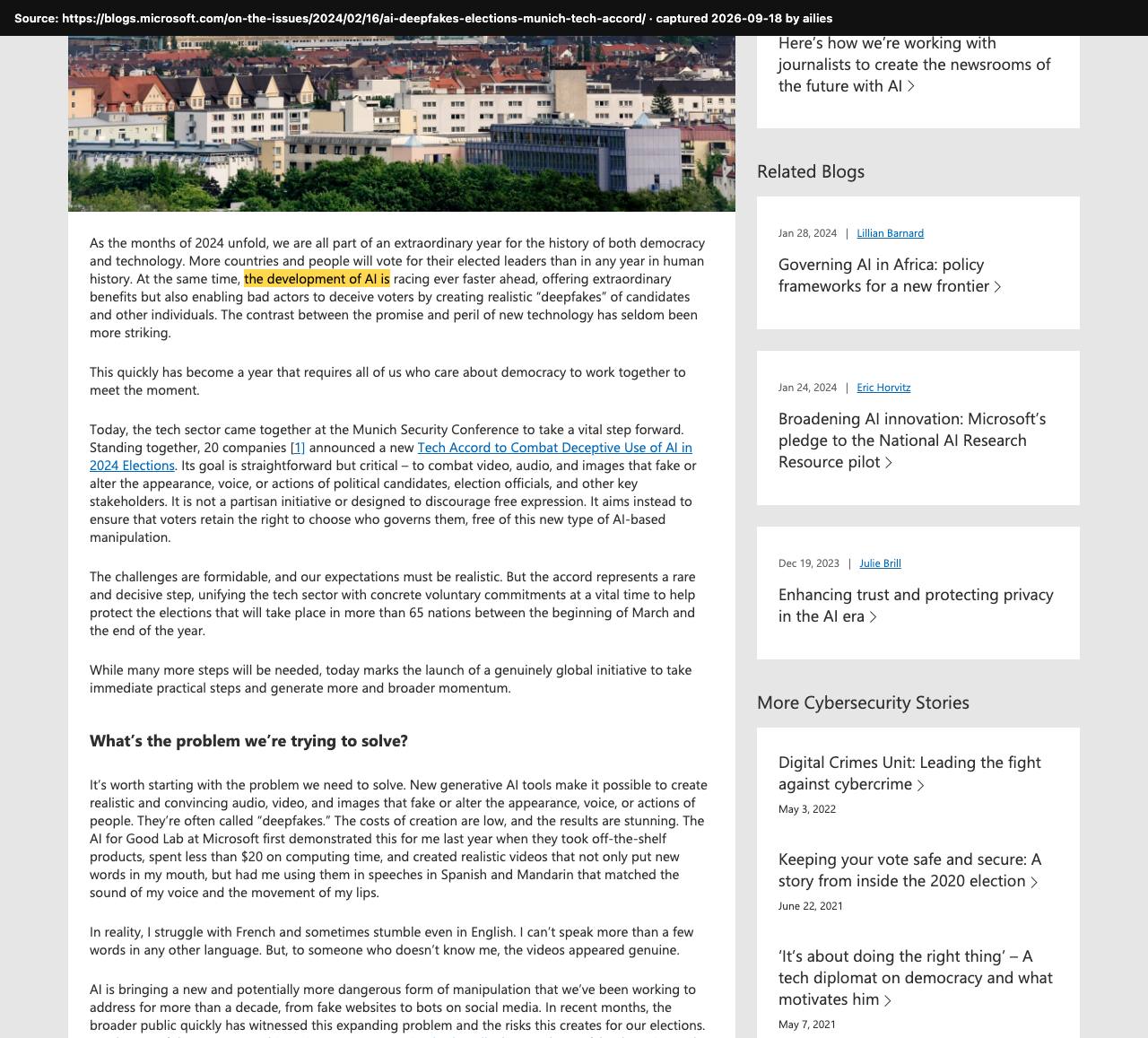
Evidence
- Microsoft MTAC (Apr 2024): deepfakes 'so far not caused mass deception' blogs.microsoft.com ↗
- Biden robocall voice made for $150 by a hired magician wbur.org ↗
- Meta (Dec 2024): AI content under 1% of fact-checked election misinformation about.fb.com ↗
- CETaS (Nov 2024): no measurable AI impact on US election cetas.turing.ac.uk ↗